Climbing Shoe Heel Fit: Why "Narrow Heel" Isn't Enough
Climbing Shoe Heel Fit: Why "Narrow Heel" Isn't Enough. Narrow heel or shallow heel? The same "empty heel" may have two completely different causes - and different shoes fix each one.
Why heel fit is hard to predict
Heel fit is key to climbing shoe performance, especially for hard boulders where a better fit, and hence less slip on aggressive heel hooks, makes a big difference. Yet, it's incredibly hard to pick the right heel from today's available online descriptions. Climbing shoes get often described with single words like "narrow" or "low-volume" on both the forefoot and the heel side, and this is simply insufficient. Two climbers with the same heel width can have a very different fit in the same shoe. This article breaks down heel width and heel depth using data from 1,013 foot scans and the 1,142 fit reports the climbers behind them left on shoes they own.
Heel width vs. heel depth: two independent dimensions
Sizing guides often treat the heel as a single dimension: narrow, normal, or wide. That's simply not enough. Our scanner explicitly captures two photos, sole and side, to measure two independent heel dimensions.
Heel width ratio captures how wide your heel is relative to your foot length. Almost every scan falls between 0.21 (very narrow) and 0.28 (wide), and the average sits at 0.238.
Heel depth ratio captures the vertical profile of your heel, essentially how much it projects backward from your ankle. Almost every scan falls between 0.003 and 0.092, with the average at 0.039. A shallow heel (under 0.028) and a deep heel (over 0.041) need fundamentally different cup shapes.
These two numbers are surprisingly independent. You can have a narrow heel with deep projection, or a wide heel that's shallow. They produce very different fit problems, and shoes respond to them differently.
A sample to showcase narrow heel vs. shallow heel
Here are two real scans from our dataset. Both climbers reported an empty heel in at least one popular shoe. The underlying mismatch is the opposite in each case.
Scan A - Narrow heel width with average depth
Egyptian toes, street size EU 45.5. Heel width ratio 0.216, heel depth ratio 0.049. Reported fits: Scarpa Drago EU 44 empty, Scarpa Instinct VSR EU 44 empty, La Sportiva Ondra Comp EU 43 empty, Scarpa Instinct VSR LV EU 44 perfect, Mad Rock D2.ONE HV EU 46 perfect.
Heel width is well below the population average whilst depth is slightly above average. The three empty heels are all shoes whose cups are too wide for this climber. The low-volume Instinct VSR LV and the high-volume D2.ONE HV with its rather narrow heel cup both grip, the standard-fit heels don't. The problem here is clearly width, not depth.
Scan B - Shallow heel depth with average width
Egyptian toes, street size EU 42.5. Heel width ratio 0.251, heel depth ratio 0.024. Reported fits: La Sportiva Skwama EU 39.5 empty, La Sportiva TC Pro EU 41 empty, Evolv Shaman EU 42.5 empty, Tenaya Mastia EU 39.5 perfect.
Heel width is around the population average (climber 0.251 vs population 0.238), while heel depth is clearly below (0.024 vs 0.039). Three shoes report empty heels and only the Tenaya Mastia, which uses a pre-shaped and rather firm heel cup, locks in. Going narrower on width wouldn't help any of the empty-heel shoes; this is a depth problem. A narrower heel would likely even worsen the situation, resulting in empty space at the back AND bottom of the heel as the foot wouldn't fit into the narrow profile.
Same written complaint, "empty heel", but two different mechanisms. If you treated both climbers as "narrow-heeled" and pointed them at low-volume lasts, you'd help Scan A and make Scan B worse.
There is a wrinkle on the Scan B side. The one shoe that gripped was the Tenaya Mastia, whose heel cup is pre-shaped from a firm, thermo-molded rubber shell, meaning the cup holds its own form. The La Sportiva Solution uses the same idea: a firm, bulbous molded cup reinforced by P3 randing. That pattern holds across the wider dataset: shallow-heeled owners rate the Solution perfect 4 times out of 6 and the Mastia 3 out of 4, both well above those shoes' overall rates.
- Foot scans: 1,013 (as of 2026-08-06)
- Fit observations: 1,142 across 219 shoes
- Shoes with ≥10 reports: 30 - patterns per shoe
Which climbing shoes fit which heel shapes? (Data from 1,142 reports)
When someone scans their feet, they also tell us what shoes they currently climb in and how those shoes fit: toes, forefoot, and heel, each rated as squeezed/tight, perfect, or loose/empty. That lets us match real fit outcomes against measured foot geometry. Thirty shoes now carry 10 or more heel ratings; below are the ones where the pattern is clearest, split by the wearer's own heel shape rather than by an overall score. Each cell is perfect heel ratings out of owners in that band. Near-identical repeat entries within an hour are counted once.
| Shoe | Reports | Narrow heel | Wide heel | Shallow heel | Deep heel | Pattern |
|---|---|---|---|---|---|---|
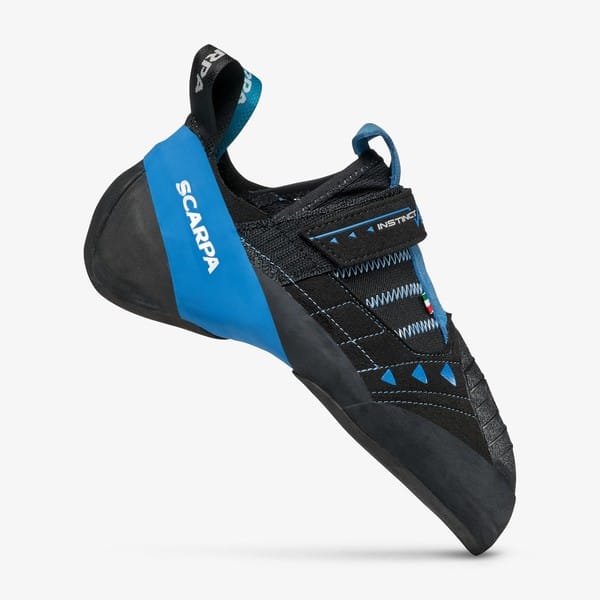 Scarpa Instinct VSR Scarpa Instinct VSR | 46 | 2/13 | 8/19 | 3/7 | 8/19 | Narrow heels fail |
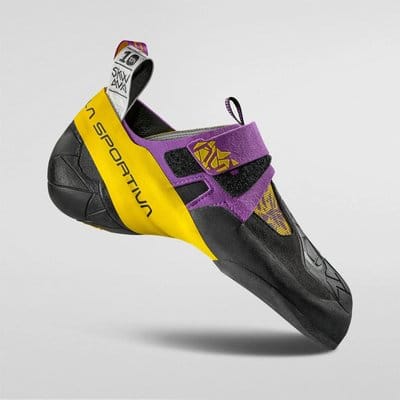 La Sportiva Skwama La Sportiva Skwama | 44 | 1/6 | 5/11 | 2/11 | 7/14 | Narrow and shallow heels fail |
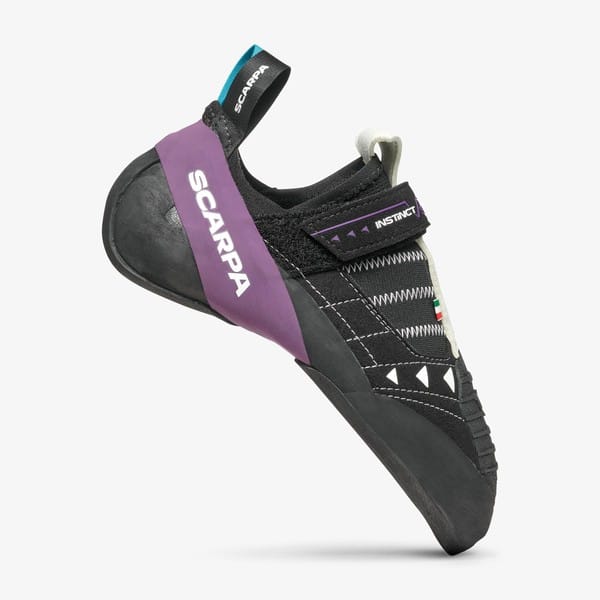 Scarpa Instinct VSR LV Scarpa Instinct VSR LV | 35 | 14/19 | 4/5 | 5/8 | 11/17 | Works across the board |
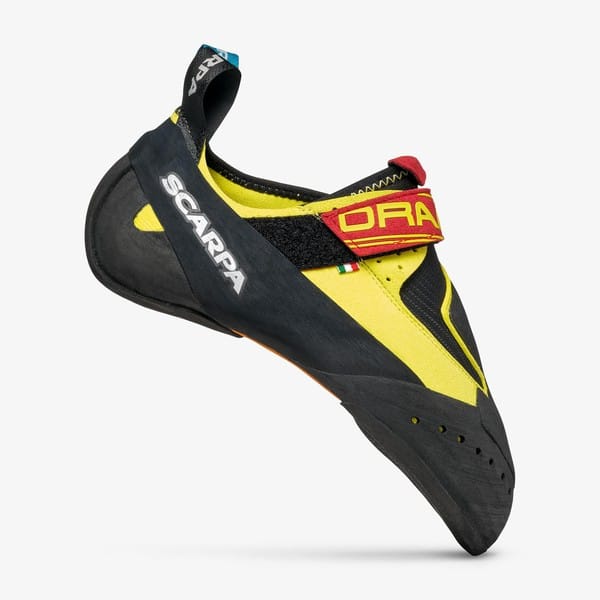 Scarpa Drago Scarpa Drago | 34 | 3/10 | 10/12 | 3/6 | 9/17 | Narrow heels fail, depth-tolerant |
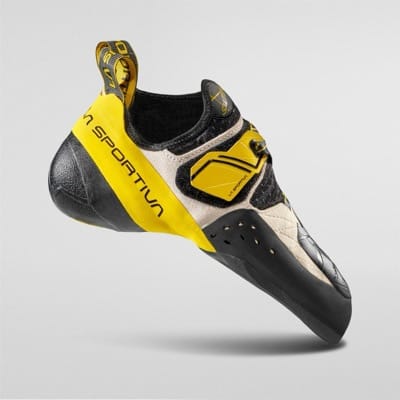 La Sportiva Solution La Sportiva Solution | 33 | 2/6 | 4/13 | 4/6 | 6/16 | The rare shallow-heel option |
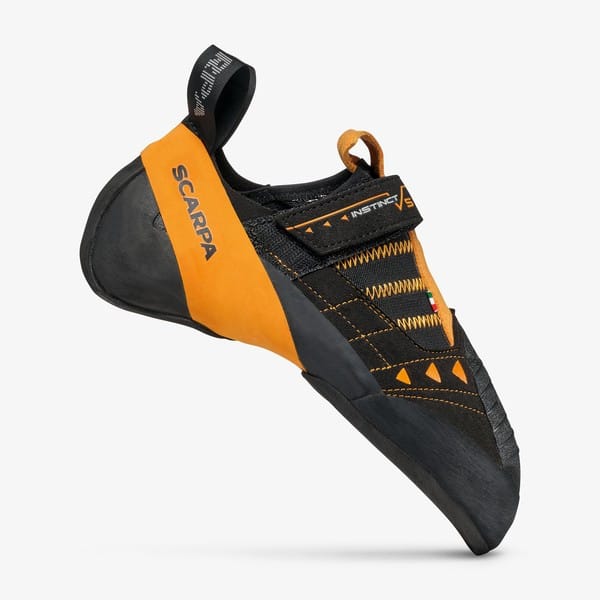 Scarpa Instinct VS Scarpa Instinct VS | 32 | 5/11 | 3/7 | 4/7 | 10/12 | Deep heels fit best |
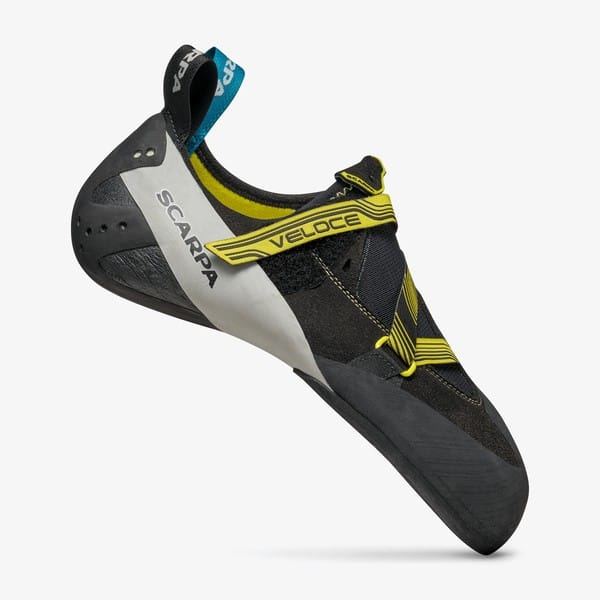 Scarpa Veloce Scarpa Veloce | 21 | 0/3 | 1/6 | 1/11 | 1/8 | Loose for nearly everyone |
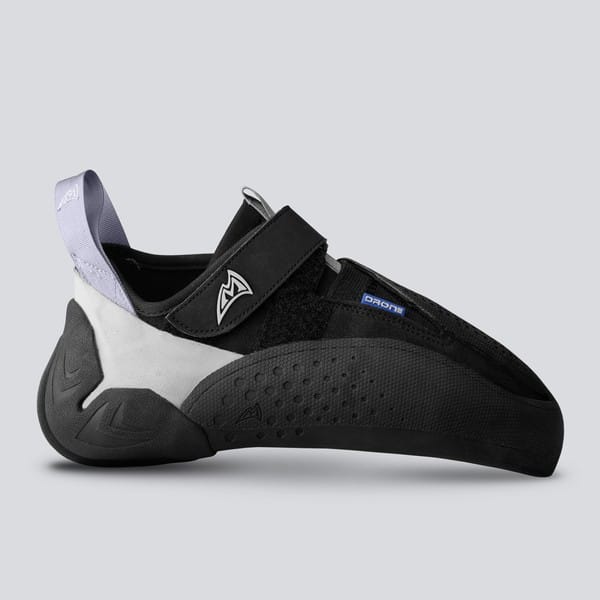 Mad Rock D2.ONE HV Mad Rock D2.ONE HV | 19 | 9/12 | 2/2 | 2/3 | 4/7 | Built for narrow heels |
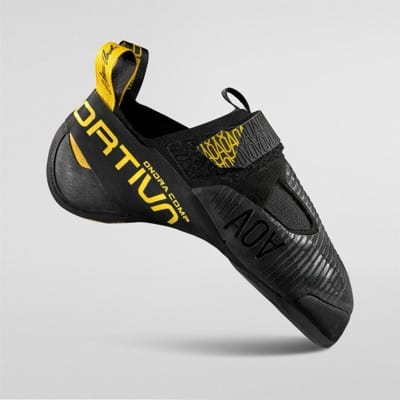 La Sportiva Ondra Comp La Sportiva Ondra Comp | 18 | 1/5 | 5/6 | 4/8 | 1/3 | Narrow heels fail |
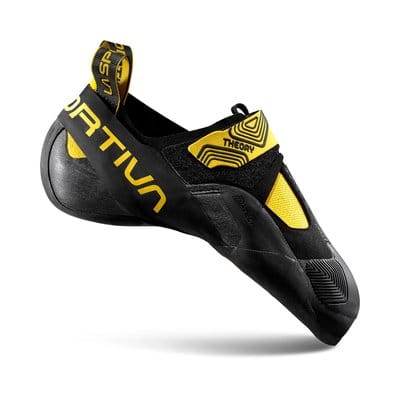 La Sportiva Theory La Sportiva Theory | 14 | 1/4 | 1/1 | 1/3 | 4/5 | Deep heels fit best |
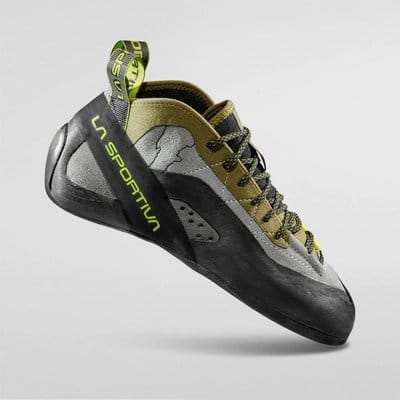 La Sportiva TC Pro La Sportiva TC Pro | 12 | 1/2 | 4/5 | 1/3 | 5/5 | Deep heels fit best |
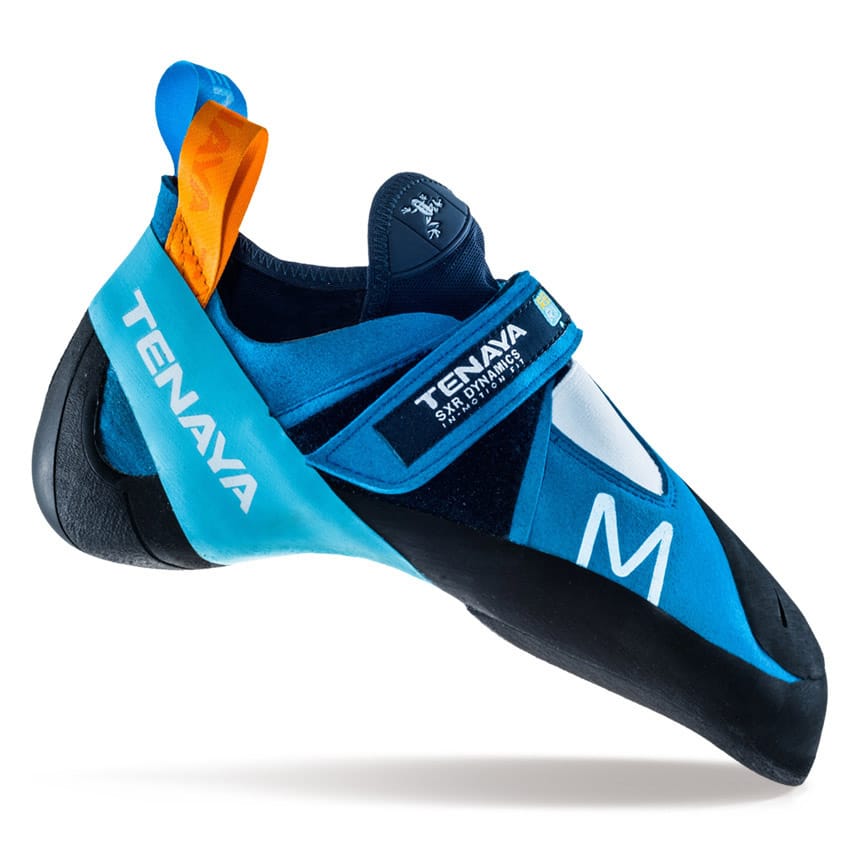 Tenaya Mastia Tenaya Mastia | 10 | 2/3 | 0/1 | 3/4 | 1/3 | Firm cup, holds shallow heels |
Scarpa Drago (34 reports)
The clearest width case in the dataset. Owners with a wide heel rate it perfect 10 times out of 12; owners with a narrow heel, 3 out of 10. Depth barely moves the result (3 of 6 shallow, 9 of 17 deep). The cup is roomy, so it rewards a heel that fills it and leaves a narrow one swimming.
Scarpa Instinct VS (32 reports)
The mirror image, driven by depth. Deep-heeled owners rate it perfect 10 times out of 12, shallow-heeled owners 4 out of 7, and heel width splits far less evenly (5 of 11 narrow, 3 of 7 wide). The TC Pro (5 of 5 deep, 1 of 3 shallow) and Theory (4 of 5 deep, 1 of 3 shallow) behave the same way on smaller samples.
La Sportiva Skwama (44 reports)
Demanding on both axes. Shallow-heeled owners rate it perfect 2 times out of 11 and deep-heeled owners 7 out of 14; narrow-heeled owners 1 out of 6 against 5 of 11 for wide heels. Its "S-Heel" reinforcement stiffens the sides of the cup rather than the back of it, so a heel that is shallow, narrow, or both never loads it. The women's Skwama is a different last and does better on narrow heels (4 of 6).
Scarpa Veloce (21 reports)
The case where neither dimension explains anything, because the cup is loose for almost everyone: 3 perfect ratings in total, 0 of 3 narrow, 1 of 6 wide, 1 of 11 shallow, 1 of 8 deep. A soft gym shoe with a generous heel is not a heel-hooking shoe at any foot shape.
The lasts that hold a narrow heel
The Mad Rock D2.ONE HV (19 reports) is the counterpoint to the Drago: marketed as a high-volume shoe, yet built on a narrow heel cup. Narrow-heeled owners rate it perfect 9 times out of 12, and only 3 owners of any heel shape call it loose. The Instinct VSR LV (14 of 19 narrow) is the other last that holds a narrow heel at a useful sample size.
Recommendations for narrow heels
The two lasts with both a good narrow-heel record and a real sample are the Scarpa Instinct VSR LV (14 of 19) and the Mad Rock D2.ONE HV (9 of 12), the latter worth knowing about if your forefoot is wide as well. The La Sportiva Kubo (4 of 6) and the women's Skwama (4 of 6) follow on smaller samples. Going the other way, narrow heels fail most often in the Instinct VSR (2 of 13), the Ondra Comp (1 of 5) and the Drago (3 of 10).
Recommendations for shallow heels
This is where it gets trickier, because most sources, manufacturer data included, do not separate heel depth from heel width at all. The pattern that holds in our data is the firm, pre-shaped cup: one that keeps its form even when the heel does not fill it. The La Sportiva Solution rates perfect for 4 of 6 shallow-heeled owners and the Tenaya Mastia for 3 of 4, both well above their own overall rate. The Otaki (3 of 5) and the Finale (3 of 6) also hold up. What to avoid with a shallow heel: the Veloce (1 of 11) and the Skwama (2 of 11). Failing a spec sheet, look at the shoe itself: a flat, soft back panel will not hold a heel that does not reach it.
How we implement two-dimensional heel scoring
This is what makes heel fit hard. The same "empty heel" complaint has completely different causes depending on the shoe and foot, but standard manufacturer descriptions often rely on a single generic fit aspect. Treating "heel" as one variable misses the mechanism.
Hence, our scorer uses two dimensions. When it evaluates whether a shoe's heel cup will work for you, it weights heel width and heel depth separately, calibrated by what we've learned from each shoe's fit pattern. We're also starting to tag shoes by heel-cup construction - firm pre-formed cups (Solution, Mastia) versus soft/thin cups with side reinforcement (Skwama) - because the same shallow-heel foot gets opposite outcomes depending on which type it meets. Moving forward we also want to introduce a proper 3D modelled heel to identify additional patterns and improve the quality of our recommendations.
Still early, getting sharper
1,013 scans is enough to read a pattern on the thirty most-reported shoes, and not enough for the rest of the catalogue. Every scan that includes a current shoe fit adds to the recommendation engine, which uses deterministic scoring rather than guesswork and gets more precise as the dataset grows. One climber can scan more than once, so near-identical repeat entries within an hour are counted once.
The goal isn't to replace trying shoes on. It's to narrow the field from 450+ shoes to the dozen that match your geometry, before you spend money on shipping or drive to a shop that might not stock what you need.
Frequently Asked Questions
Why does my climbing shoe heel feel empty?
An empty heel almost always comes down to one of two independent mismatches between your foot and the shoe's heel cup: heel width (how wide your heel is relative to your foot length) or heel depth (how far your heel projects backward from your ankle). A single adjective like "narrow heel" hides which one is actually wrong. In the climbing-gear.com foot-scan dataset the Scarpa Drago fails narrow heels, the Scarpa Instinct VS fails shallow ones, the La Sportiva Skwama fails both, and the Scarpa Veloce is loose regardless of heel shape.
Which climbing shoes fit narrow heels?
Based on climbing-gear.com foot-scan data, the best bets for narrow heels (heel width ratio under ~0.23) are the Scarpa Instinct VSR LV, rated perfect by 14 of 19 narrow-heeled owners, and the Mad Rock D2.ONE HV at 9 of 12. The Instinct VSR LV is specifically narrowed through the heel; the D2.ONE HV is unusual in pairing a high-volume last with a rather narrow heel cup. Standard-width cups from the Scarpa Drago (3 of 10), Scarpa Instinct VSR (2 of 13) and La Sportiva Ondra Comp (1 of 5) often leave narrow heels empty.
Which climbing shoes fit shallow heels?
Shoes with firm, pre-shaped heel cups work best for shallow heels (heel depth ratio under ~0.028). In our dataset the La Sportiva Solution (4 of 6 shallow-heeled owners rate it perfect) and the Tenaya Mastia (3 of 4) both lock shallow heels in, because their molded rubber shells hold their own form rather than relying on rand tension to pull flat rubber tight. Shoes that consistently fail on shallow heels include the Scarpa Veloce (1 of 11) and the La Sportiva Skwama (2 of 11).
Does the Scarpa Instinct VSR fit narrow heels?
Not reliably. Across 46 reports, only 2 of the 13 narrow-heeled owners rate the Scarpa Instinct VSR heel perfect, against 8 of 19 wide-heeled owners. The low-volume Scarpa Instinct VSR LV is a much better choice for narrow heels, at 14 of 19.
Does the La Sportiva Skwama fit shallow heels?
Mostly not, and narrow heels fare no better. Across 44 reports, shallow-heeled owners rate the heel perfect 2 times out of 11 and deep-heeled owners 7 out of 14; narrow-heeled owners 1 of 6 against 5 of 11 for wide heels. The Skwama's "S-Heel" reinforcement is a side stiffener, not a firm rear shell, so a heel that is shallow, narrow, or both never loads the cup. The women's Skwama is a different last and does better on narrow heels (4 of 6).
What's the difference between a narrow heel and a shallow heel?
Heel width is how wide your heel is relative to foot length (scan-set average 0.238). Heel depth is how far your heel projects backward from your ankle (scan-set average 0.039). They're largely independent: you can have a narrow heel with deep projection, or a wide heel that's shallow. Each needs a different cup shape, which is why single-adjective descriptions like "narrow heel" aren't enough.
Related reading: The best climbing shoes for narrow heels, from 1,000+ foot scans - the full ranking with live owner counts per shoe. The individual reports behind the counts on this page, filtered to your own heel width and heel depth: which climbing shoes fit your foot shape.
Try it yourself: climbing-gear.com/scan.